You may have already read about it: dermaplaning. A treatment that sounds like something drastic, but is in reality one of the gentlest and most immediate ways to renew your skin. No chemical peels, no long recovery time. But a visible result from the very first session.
At Mavi Clinique in Brasschaat, we use dermaplaning strategically — not as a standalone treatment, but as preparation and an amplifier within our skin programmes. In this article we explain what dermaplaning is exactly, how it works, and who it's worthwhile for.
What is dermaplaning exactly?
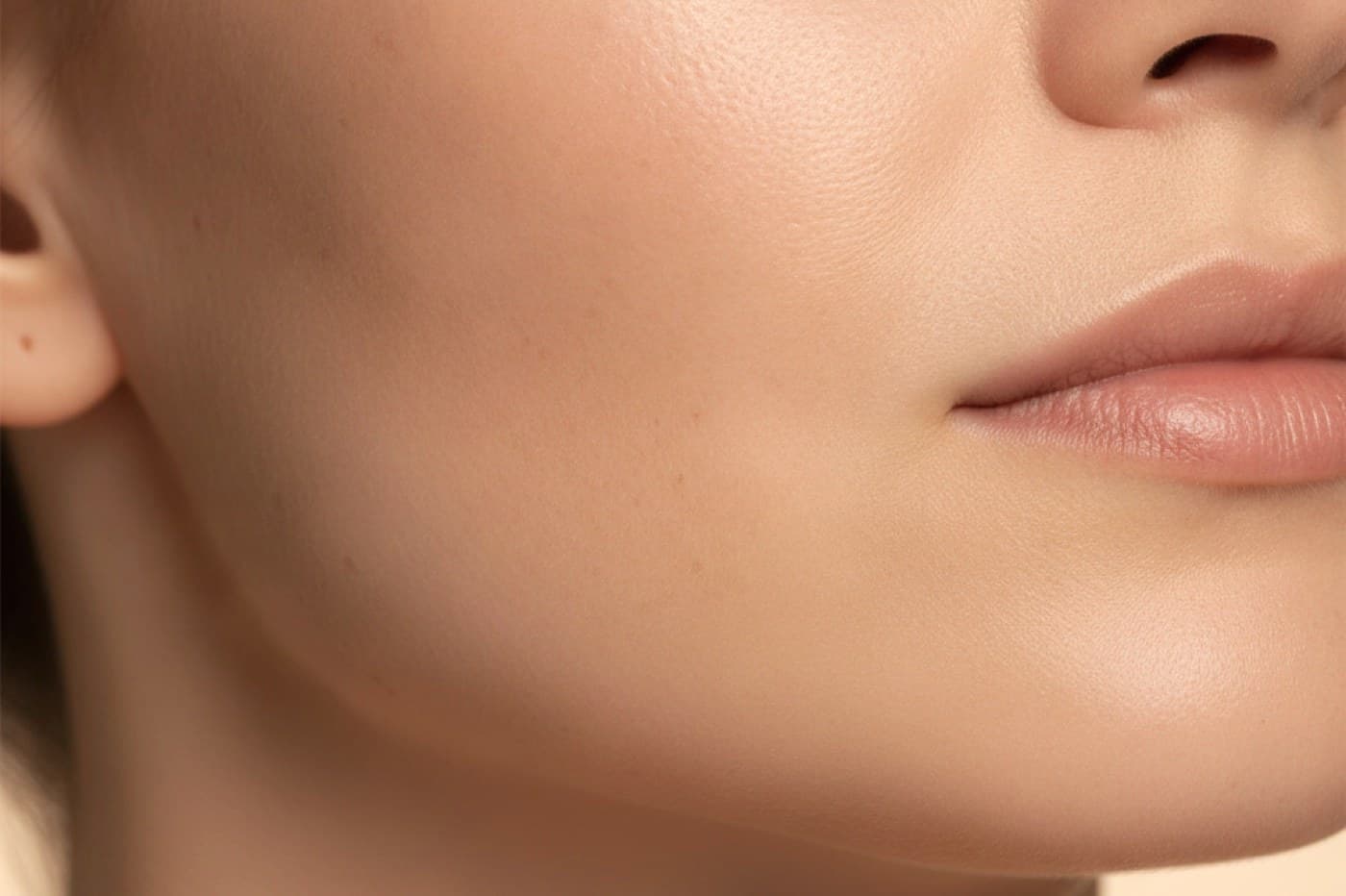
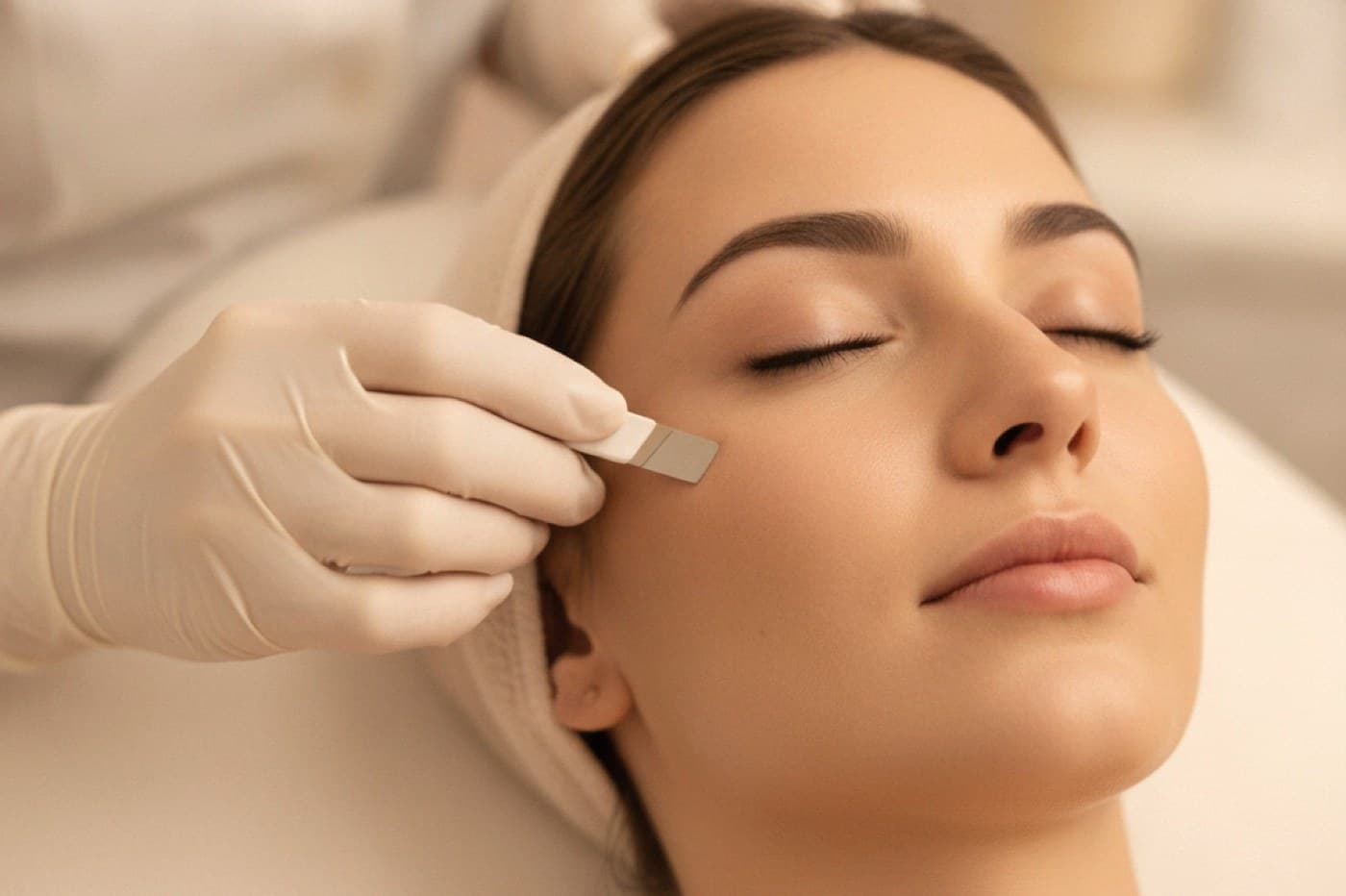
Dermaplaning is a physical exfoliation technique in which a sterile surgical blade is moved across the skin at a 45-degree angle. It removes two things at once: the top layer of dead skin cells (the stratum corneum) and the fine vellus hairs — also known as peach fuzz. The result is smooth, clean skin that looks visibly fresher and brighter straight away.
It sounds intimidating, but dermaplaning is completely painless. Nothing is cut or scraped — the blade glides lightly over the skin. The treatment takes an average of 30 min and requires no anaesthesia or preparation. Afterwards you can carry on with your day right away.
How does dermaplaning work on the skin?
Dermaplaning works on two levels. The first is mechanical exfoliation: by removing the layer of dead cells, you stimulate cell renewal. New, healthy skin cells reach the surface more quickly, resulting in a more even and radiant complexion. This is comparable to the effect of a chemical peel, but without chemicals and without recovery time.
The second level is product penetration. Skin without a barrier of dead cells and vellus hairs absorbs active ingredients far better. That means your serums, vitamin C, hyaluronic acid and other active ingredients are more effective after dermaplaning. At Mavi we use this strategically: we often schedule dermaplaning before treatments such as LED light therapy or a hydrating mask treatment, so that every step works optimally.
Who is dermaplaning suitable for?
Dermaplaning is suitable for most skin types and is especially effective for women dealing with a dull, matte complexion, fine lines that become more visible due to a build-up of dead skin cells, uneven texture, or vellus hairs that make make-up look flaky. It's also an ideal treatment for women who are sensitive to chemical exfoliants and are looking for a mild alternative.
There are, however, contra-indications. Dermaplaning is not suitable in the case of active acne, open wounds, an active herpes infection or severely irritated skin. At Mavi we always assess this beforehand during your skin analysis — we never treat if the skin isn't ready for it.
Dermaplaning at Mavi: preparation, not an end in itself
This is an important distinction. At many salons, dermaplaning is offered as a standalone treatment — nice for a glow, but without any long-term strategy. At Mavi we see it differently. We use dermaplaning as a preparatory step within a broader skin programme.
In practice, this means that dermaplaning often precedes an LED light therapy session, so that the light reaches the skin unhindered. Or that we use it before a hydrating treatment, so that active ingredients penetrate more deeply. In our phased skin renewal programmes, dermaplaning plays a key role as a skin preparer — it literally makes room for the treatments that come afterwards.
Frequently asked questions about dermaplaning
The most common question: do the hairs grow back thicker? No. Vellus hairs are fine and thin — that doesn't change with dermaplaning. They are shaved off, not epilated, and grow back in the same texture and colour. This is a persistent myth that doesn't match the biology of hair growth. Terminal hair (thick, dark hair) is not affected by dermaplaning, simply because those hairs are not treated.
Another frequently asked question: how often can you have dermaplaning done? On average we advise every three to four weeks, depending on your skin type and how quickly your cell renewal takes place. That fits precisely with the rhythm of your skin cycle. Treating too often offers no extra benefit and can actually irritate the skin. At Mavi we always tailor the treatment rhythm to your skin, not to a standard schedule.
Experience the difference yourself
Dermaplaning is one of those treatments whose effect you see and feel straight away. Your skin is smoother, your complexion brighter, and your skincare works noticeably better. But the real benefit lies in the combination with a well-thought-out skin programme — and that's exactly where Mavi makes the difference. Results may vary from person to person.
Curious whether dermaplaning fits into your skin strategy? Book a free skin consultation at Mavi Clinique. We analyse your skin, discuss your goals, and draw up a plan in which every treatment has a purpose. No isolated treatments — but a strategy that works.