You may know the feeling: a dark spot that no longer fades after the summer. An uneven skin tone that foundation doesn't fully cover. Or brown areas on your upper lip and cheeks that slowly get darker. Hyperpigmentation is one of the most common skin concerns among women over 30 — and one of the most frustrating, because many products make promises they don't keep.
At Mavi Clinique, we don't treat hyperpigmentation with quick tricks. We start by understanding the mechanism. Because only when you know why your skin overproduces pigment can you tackle it in a targeted way. In this article we explain exactly what happens in your skin, which types of hyperpigmentation exist, and which approach really works.
What exactly is hyperpigmentation?
Hyperpigmentation literally means: too much pigment. Your skin contains melanocytes — cells that produce melanin, the pigment that determines your skin colour. Normally these cells distribute melanin evenly across your skin. But when melanocytes are overstimulated, they produce too much melanin locally. The result: dark spots, areas or an uneven skin tone.
This process is called melanogenesis and is driven by the enzyme tyrosinase. Anything that activates tyrosinase — UV radiation, hormones, inflammation — can cause or worsen hyperpigmentation. That's why pigmentation problems are so stubborn: the trigger sits deep in the biology of your skin.
The three main types of hyperpigmentation
Not all pigment spots are the same. The type determines which approach works. There are three main categories that we come across most often at Mavi.
Sun spots (lentigo solaris) are the most common. They develop through years of UV exposure and typically appear on the face, hands and décolleté. They are flat, brown to dark brown, and darken after sun exposure. This type generally responds best to treatment.
Post-inflammatory hyperpigmentation (PIH) develops after skin damage or inflammation — think of acne, eczema, a small wound or even overly aggressive skincare. The damaged skin produces extra melanin in response to the inflammation. PIH is more common in darker skin types and can persist for months or years without treatment.
Melasma is the most complex type. It is caused by a combination of hormones and UV exposure, and appears as symmetrical brown areas on the cheeks, forehead or upper lip. Pregnancy, contraception and hormonal fluctuations are common triggers. Melasma is notoriously difficult to treat because it is hormonally driven and returns quickly with sun exposure.
Why sun protection is the foundation of every pigmentation treatment
We can't emphasise this enough: without consistent sun protection, every pigmentation treatment is pointless. UV radiation is the number one trigger for all types of hyperpigmentation. Even if your pigment spots lighten through a treatment, UV will reactivate them immediately. SPF 30+ every day — even when it's cloudy, even in winter — is not optional. It's the foundation.
At Mavi we recommend a broad-spectrum sunscreen with UVA and UVB filters. Mineral filters (zinc oxide, titanium dioxide) are often better tolerated by sensitive skin. And don't forget: reapply every two hours when you're outside, even if you use a high factor.
What works for hyperpigmentation: ingredients and treatments
When it comes to skincare, there are a number of ingredients with proven effectiveness against hyperpigmentation. Vitamin C (L-ascorbic acid) is a powerful antioxidant that inhibits tyrosinase and thereby reduces melanin production. Niacinamide (vitamin B3) prevents melanin from being transferred to the superficial skin cells. Retinol speeds up cell renewal, so that pigmented cells are shed more quickly. And azelaic acid works both as an anti-inflammatory and a pigment inhibitor — ideal for PIH and melasma.
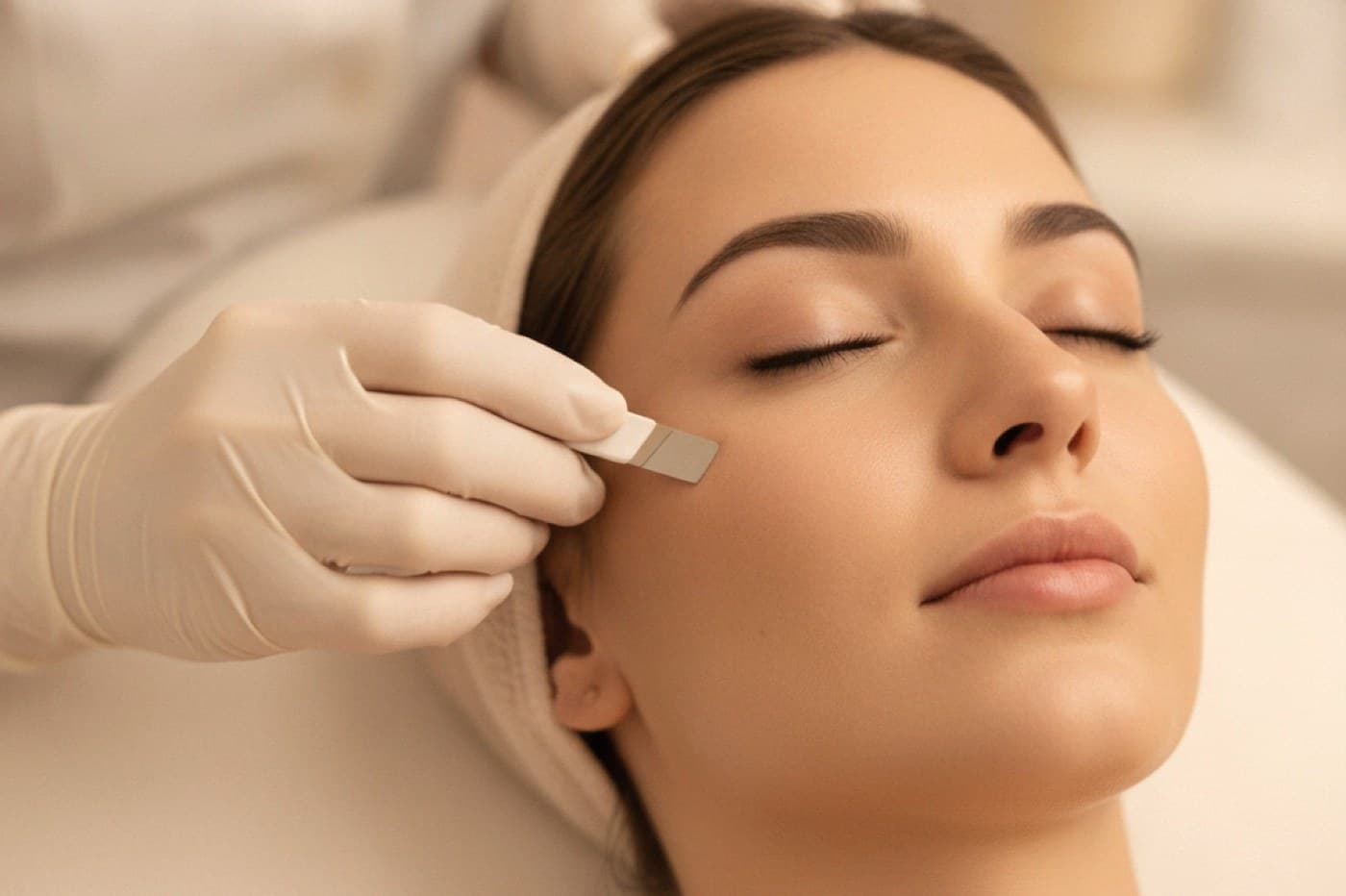
But skincare alone is often not enough for stubborn hyperpigmentation. Professional treatments can speed up the process. At Mavi we work with LED light therapy to reduce inflammation and accelerate skin recovery — especially valuable for post-inflammatory hyperpigmentation. Dermaplaning helps remove the top layer of dead skin cells, so that pigment-correcting products penetrate better. And in a phased skin renewal programme we combine several techniques that renew the skin from within.
Common mistakes with hyperpigmentation
At Mavi we regularly see women who unintentionally make their pigmentation worse. The most common mistake is overly aggressive exfoliation — the idea that you can scrub the spots away. The opposite is true: damaging the skin actually triggers more pigment. Another common mistake is the use of lemon juice or other home remedies. These disrupt your skin's pH and can cause burns and severe PIH.
Also important: impatience. Hyperpigmentation doesn't fade in a week. A realistic timeline is three to six months for mild pigmentation, and six to twelve months for melasma. Consistency in your routine and sun protection determine your success. Results may vary from person to person.
Tackling hyperpigmentation: start with a skin analysis
The most important thing with hyperpigmentation is the right assessment. Sun spots, PIH and melasma each call for a different approach. The wrong treatment can make the problem worse instead of better. That's why at Mavi we always start with a thorough skin analysis: we assess the type of pigmentation, the depth of the pigment, your skin type and your lifestyle factors.
Based on that, we draw up a personal plan — not a standard treatment, but a strategy that fits your specific situation. Want to know which type of hyperpigmentation you have and what the best approach is? Book a free skin consultation at Mavi Clinique. We look at your skin honestly and give you a realistic plan. No promises we can't keep — but an approach that works.