You invest in good serums, book professional treatments and pay attention to your diet. But if you skip one step, you undermine everything: sun protection. Research shows that up to 80% of visible skin ageing is caused by UV radiation — not by your age, not by genetics, but by the sun. That makes SPF far more than just a skincare step. It's your most powerful anti-ageing weapon.
At Mavi Clinique, we begin every skin conversation with the same question: how do you protect your skin against the sun? The answer determines more than you might think. In this article, we explain exactly what UV radiation does to your skin, which mistakes women make most often, and how to use sun protection truly effectively.
What does UV radiation do to your skin?
The sun emits two types of UV rays that reach your skin: UVA and UVB. UVB rays are responsible for sunburn — they damage the outer skin layer and are strongest between 11:00 and 15:00. UVA rays go deeper. They penetrate into the dermis, where your collagen and elastin sit. UVA is present all day, all year round, even through windows and cloud cover.
The treacherous thing about UVA is that you don't feel it. You don't burn. But in the meantime, UVA breaks down collagen, damages the DNA of your skin cells, activates melanin production (pigment spots) and destroys elastin fibres. This process is called photo-ageing — ageing caused by light. It results in wrinkles, skin laxity, an uneven complexion and loss of firmness. And it begins at a young age, long before you see the damage.
The most common mistakes with sun protection
At Mavi, we see women every week who think they're well protected but make crucial mistakes. The first and most common: only using sun protection in summer or at the beach. UVA radiation is present all year round — also in November, also on a cloudy day in April. Sun protection is a year-round obligation, not a summer ritual.
Other common mistakes: applying too little product (you need a full teaspoon for your face and neck), not reapplying after two hours of outdoor activity, and relying on the SPF in your foundation. Make-up with SPF is a nice bonus, but the amount you apply is never enough to reach the stated protection factor. You need a dedicated sunscreen as a base.
SPF 30 or SPF 50: does it make a difference?
A frequently asked question in our clinique. SPF 30 blocks around 97% of UVB rays, SPF 50 around 98%. The difference sounds small, but for women with pigmentation sensitivity, melasma or a lighter skin tone, that extra percent can be relevant. More important than the SPF number, however, is choosing a broad-spectrum product — one that protects against both UVA and UVB.
There are two main types of filters: chemical and mineral. Chemical filters (such as avobenzone and octinoxate) absorb UV rays and convert them into heat. Mineral filters (zinc oxide and titanium dioxide) reflect UV rays like a physical shield. For sensitive skin or after treatments such as dermaplaning or LED therapy, we at Mavi often recommend mineral filters — they are gentler and cause less risk of irritation.
Why sun protection safeguards your treatment results
This is something many women underestimate: sun protection determines how long your treatment results stay visible. Are you investing in HIFU for structural lifting? Without SPF, UV breaks down the newly produced collagen faster than your body can build it up. Are you working on reducing pigmentation? One afternoon without protection can undo weeks of progress.
At Mavi Clinique, SPF is therefore not optional advice — it's an integral part of every skincare programme. Whether you're following a HIFU lifting treatment or a phased treatment for total skin renewal: consistent sun protection maximises your result and protects your investment. We always discuss this during your skin consultation, including product choice and application technique.
Repairing sun damage: what is possible?
The good news: part of the sun damage is repairable. Your skin has a built-in repair mechanism, and with the right support you can achieve visible improvement. Vitamin C helps neutralise free radicals and stimulates collagen production. Retinol speeds up cell renewal and helps shed pigmented cells. Niacinamide reduces the transfer of melanin to the skin surface.
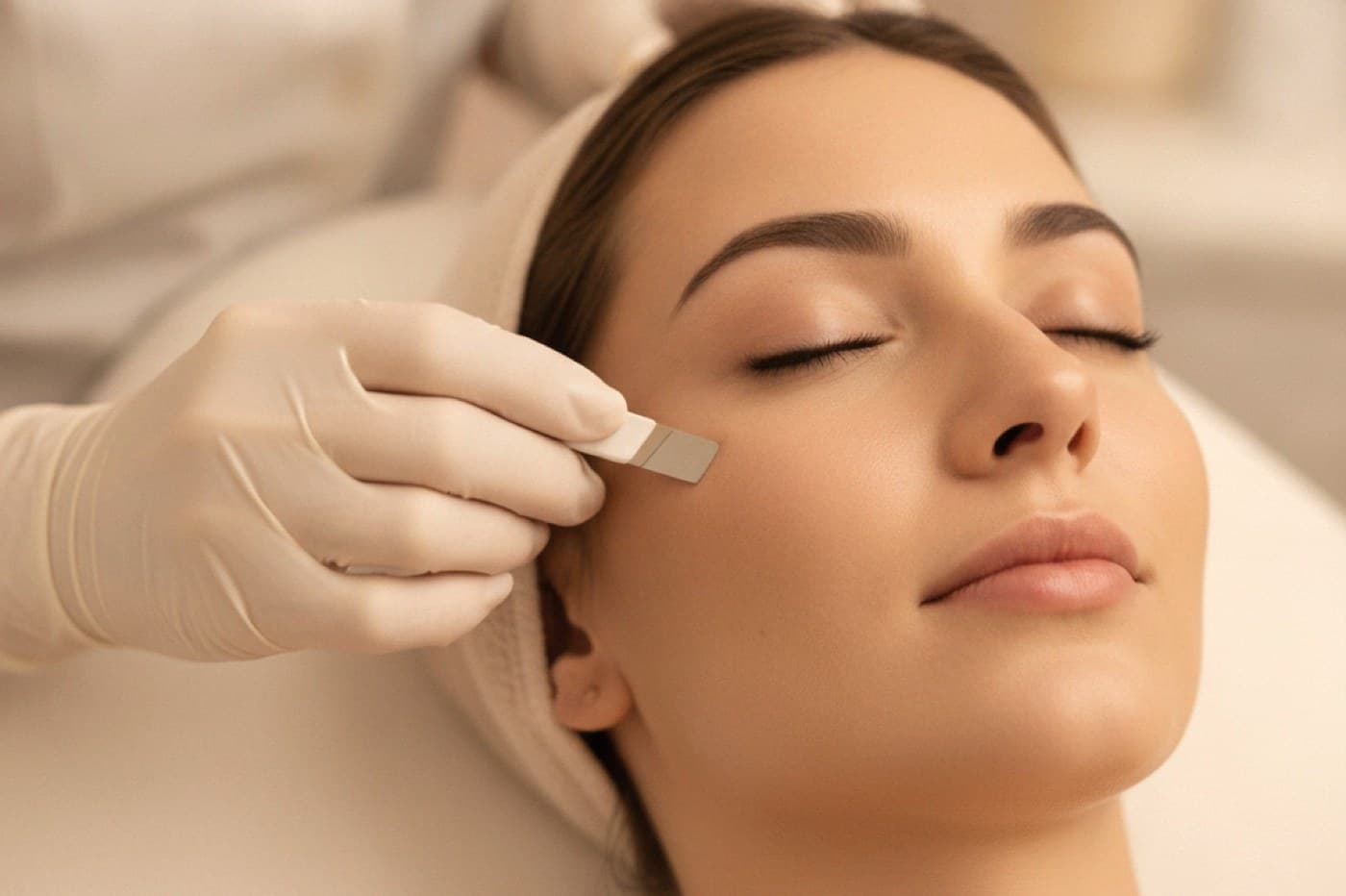
Professional treatments strengthen this process. LED light therapy stimulates cellular energy and repair function. Dermaplaning removes the damaged top layer of skin and makes way for new, healthier cells. And for stubborn pigmentation or deep texture damage, we work with phased treatments that combine several techniques. Results may vary from person to person.
Start structural protection today
The best time to start sun protection was twenty years ago. The second-best time is today. It doesn't matter how much sun damage you've already built up — every day you protect your skin, you prevent new damage and give your skin the chance to repair itself.
Would you like to know how your skin is doing and which approach suits you best? Book a free skin consultation at Mavi Clinique. We analyse your skin honestly, discuss any sun damage and draw up a plan that combines protection and repair. No sales pitch — just a strategy that works.